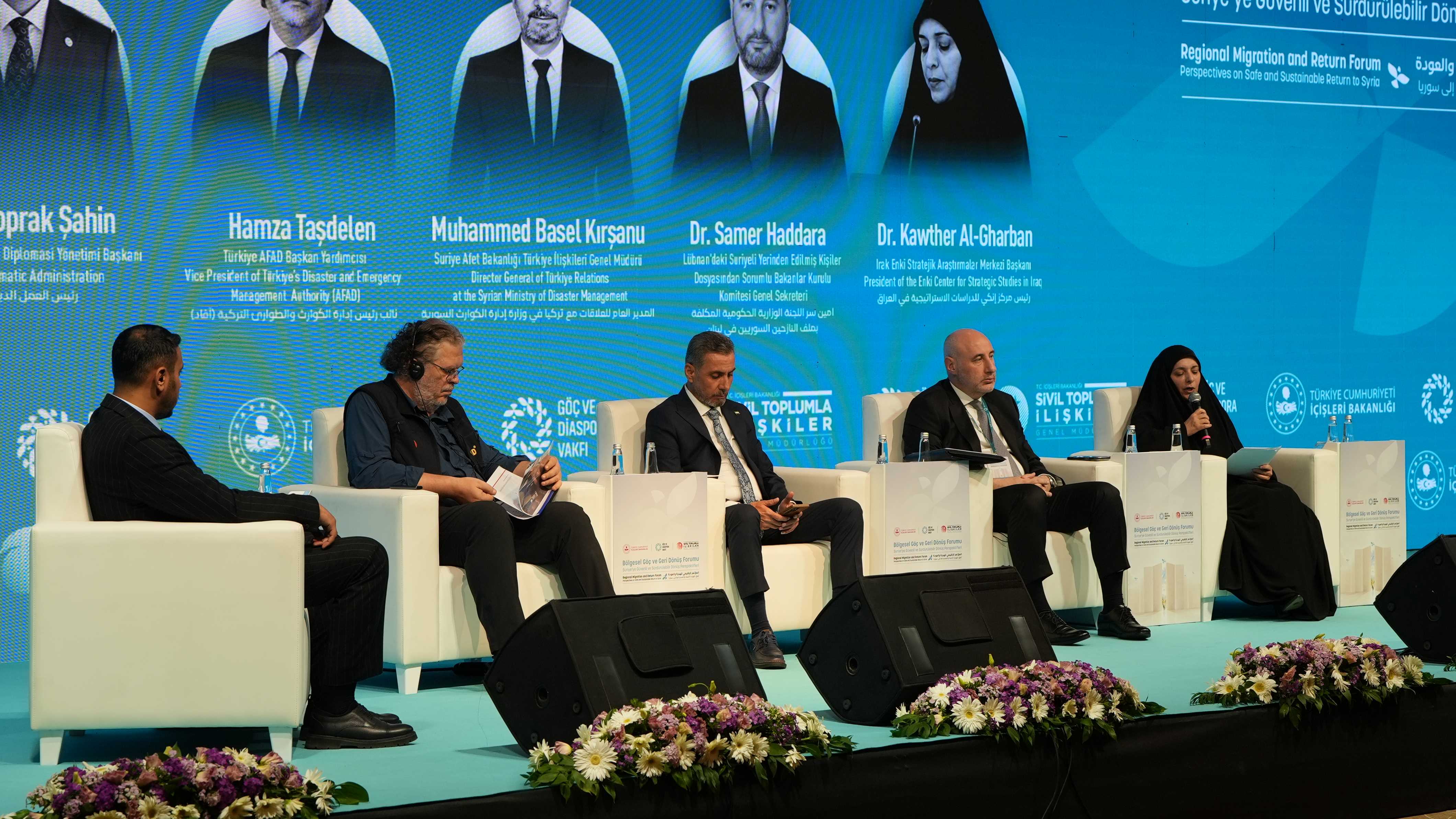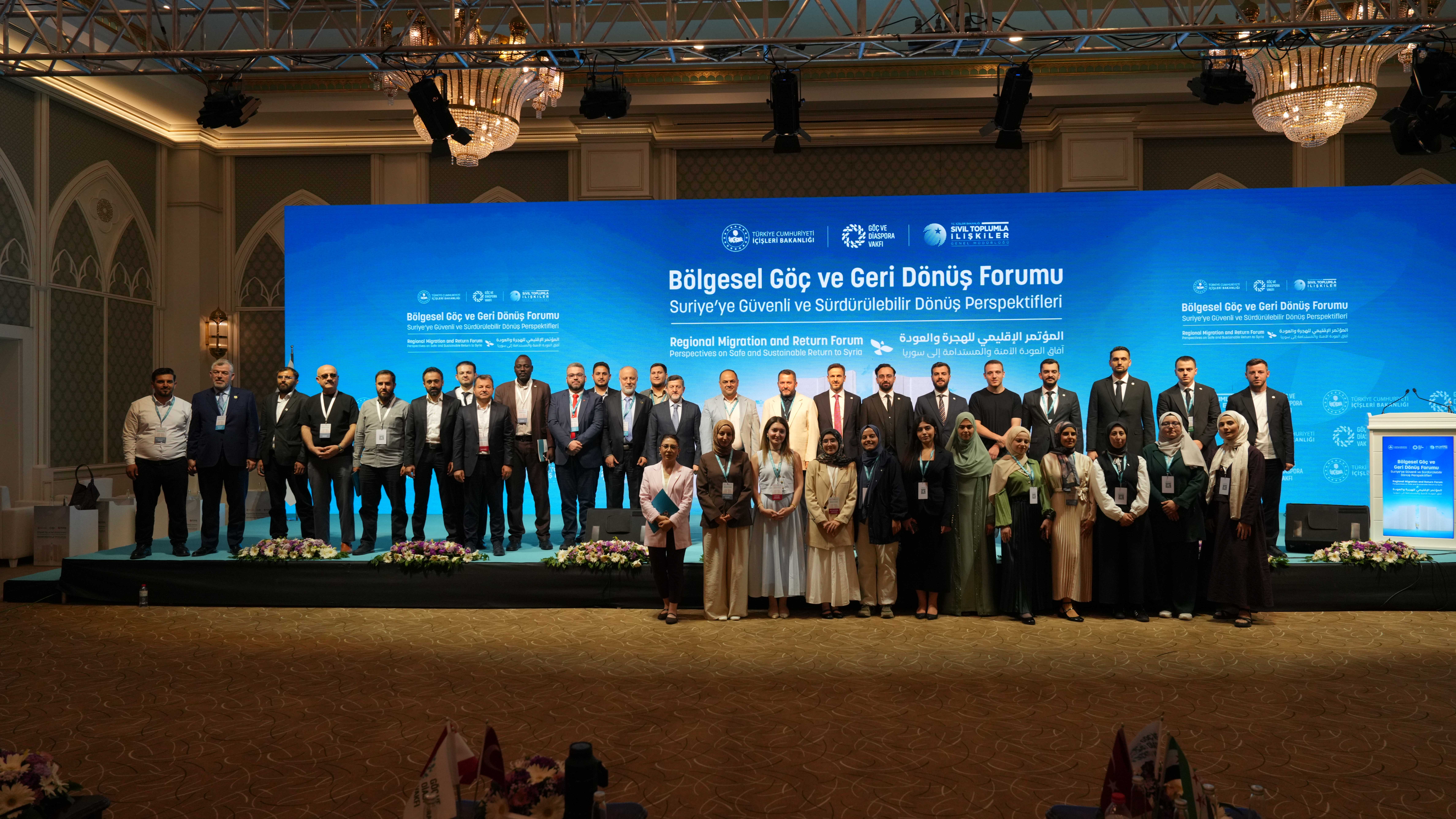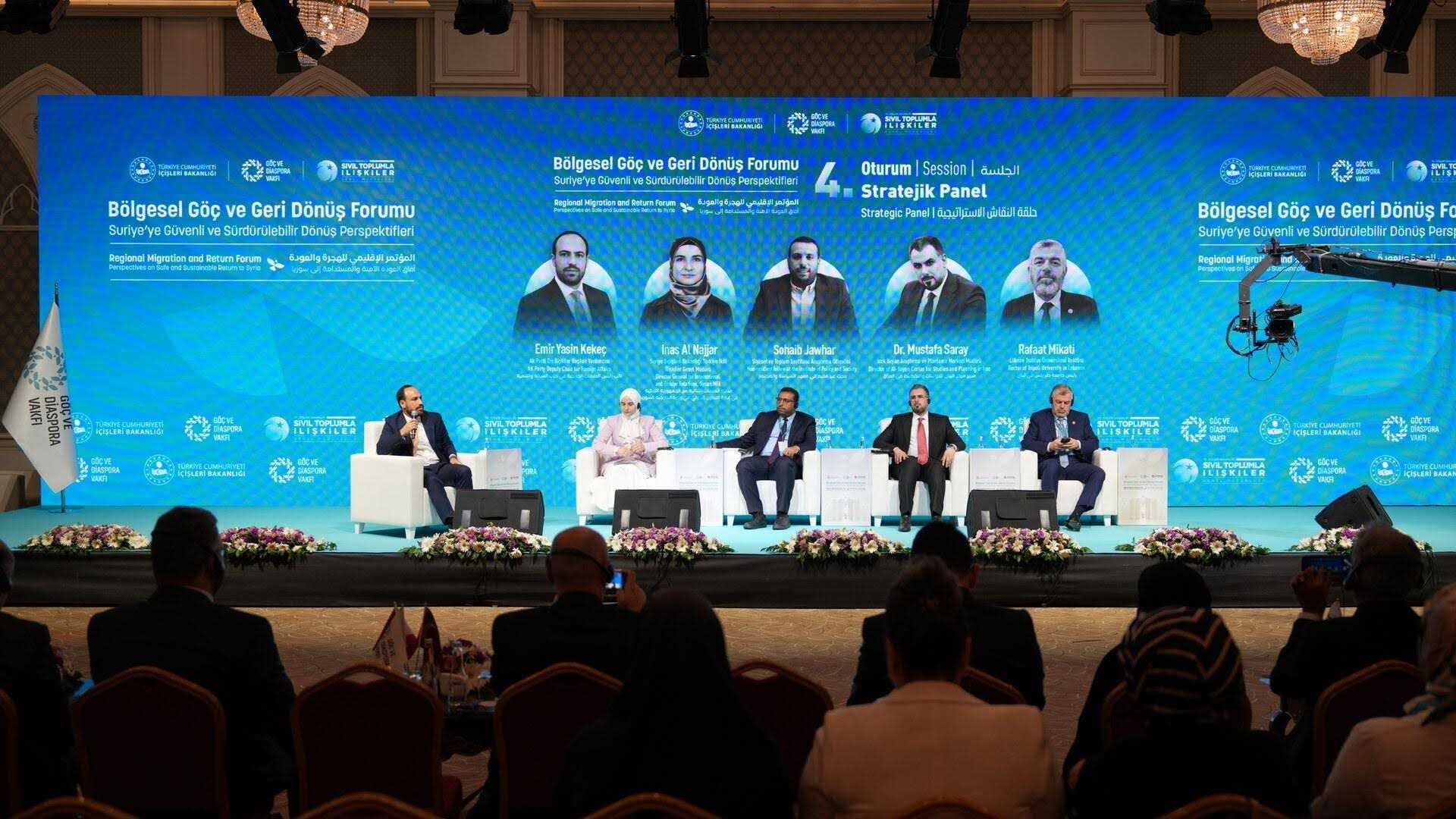
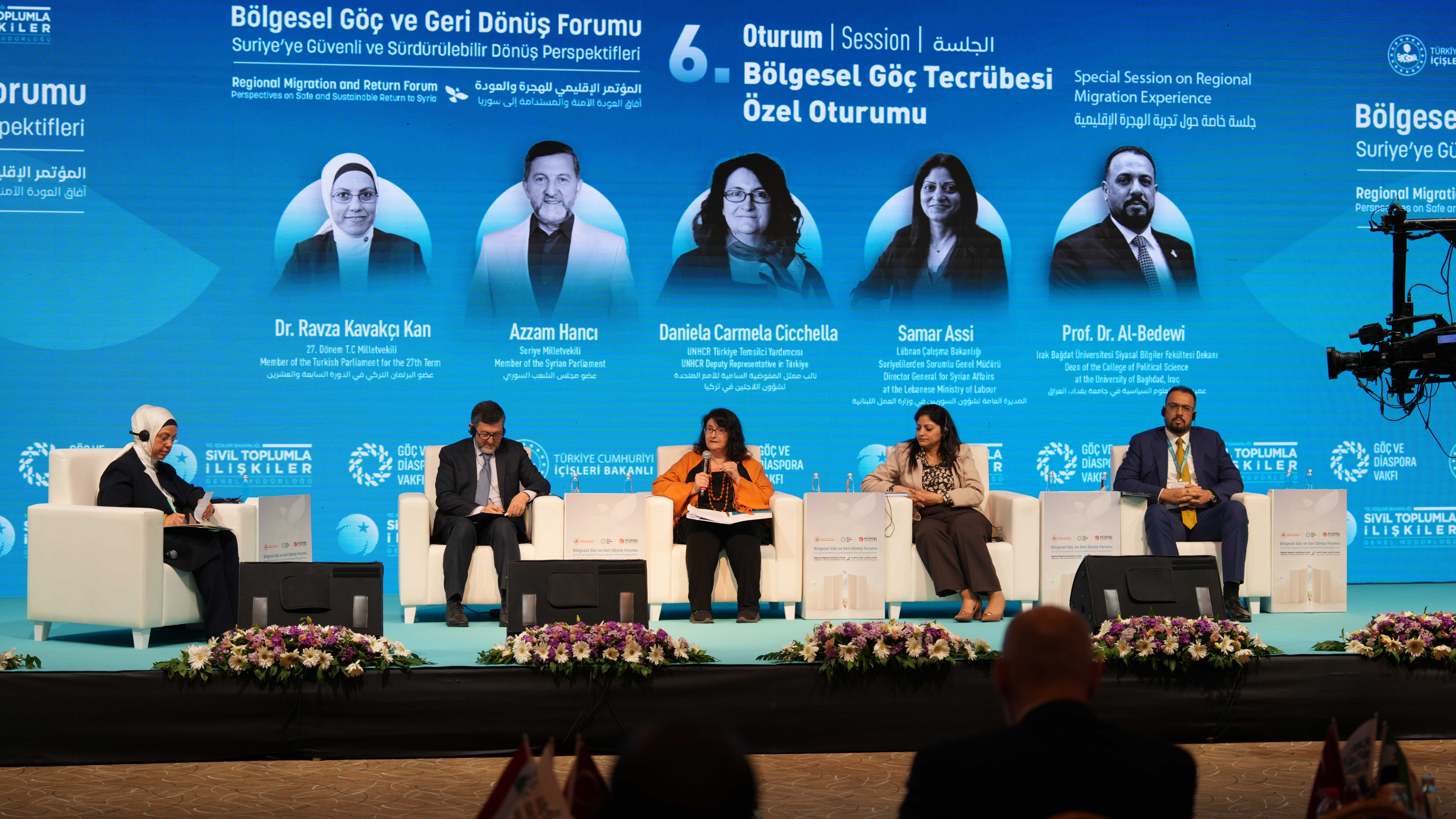
In the Special Session on Sharing Migration Experience of Regional Countries held within the scope of the Regional Migration and Return Forum, the migration management experiences of regional countries were addressed from a comparative perspective.
In the session moderated by Dr. Ravza Kavakcı Kan, Member of Parliament for the 27th Term; Syrian Member of Parliament Azzam Hancı, UNHCR Deputy Representative in Turkey Daniela Carmela Cicchella, Director General of Syrian Labor at the Lebanese Ministry of Labor Samar Assi, and Dean of the Faculty of Political Science at the University of Baghdad Prof. Dr. Al-Bedewi shared their views.
Referring to current data at the opening of the session, Kavakcı Kan relayed that as of the beginning of July 2026, there were 2 million 245 thousand people under temporary protection in Turkey, and that approximately 1.5 million people returned to Syria in the 2016-2026 period.
Hancı: The reconstruction process requires a long-term effort

Based on international reports, Syrian Member of Parliament Azzam Hancı stated that approximately 14 million Syrians were subjected to internal and external migration, and that the reconstruction of the country requires a very large-scale investment. Relaying that, according to a 2025 UNDP report, half of the infrastructure is destroyed, Hancı expressed that for this reason he does not expect returns to occur in a short time and collectively.
Drawing attention to the presence of Syrians who have been educated in well-established universities around the world and work in large companies, Hancı said that if this human capital returns to the country and participates in the reconstruction process, a significant transformation would be possible. He emphasized that establishing a strategic integration plan among regional countries would create a strong synergy.
Particularly pointing out the decisive role of education in return, Hancı relayed that the lack of universities during the war period was identified as one of the main reasons for migration, thousands of students were graduated from universities established upon this, and today this work is continued with new universities. He stated that during the conflict period, attempts were made not to interrupt education through facilities such as mobile schools, tent schools, and underground classrooms, and accelerated programs were applied for students who lost years.
Hancı also touched upon the fact that children who stayed abroad for a long time have weakened ties with their mother tongue and culture, stating that when families decide to return, children struggle with academic Arabic; therefore, language and culture programs carried out by non-governmental organizations are critical in terms of strengthening the sense of identity and belonging.
Cicchella: Voluntariness is essential, coercion does not yield sustainable results

UNHCR Deputy Representative in Turkey Daniela Carmela Cicchella relayed that after December 2024, 1.9 million internally displaced people returned to their former settlements and 1.7 million Syrian refugees returned to their country; however, approximately 10 million Syrians are still outside the country.
Stating that a large-scale return is not expected in the short term, and in the long term the rate in some countries could rise to the level of 65 percent, Cicchella emphasized that the fundamental principle of the process that cannot be compromised is voluntariness. She expressed that Syrians who are not currently in a position to return should continue to be supported in the countries where they are located, and that students receiving education experiencing residence permit issues would effectively mean coercion.
Touching upon good practices in the region as well, Cicchella cited as examples Turkey offering Syrians the opportunity to spend time in their country to refresh family ties, no fees being charged to Syrians at border crossings in Lebanon, and the work of Iraqi authorities supporting return. Stating that the refugee law framework in Turkey is one of the best examples in the world, Cicchella noted that while access to higher education for refugees is at a global average level of 6 percent, it reached 14 percent in Turkey.
Cicchella also drew attention to a growing risk of statelessness in the region. Stating that there are children rendered stateless in host countries due to unregistered marriages and lack of documentation, she characterized Egypt's regulation allowing the mother's citizenship to be transferred to the child in certain cases as a practice that could serve as an example for the region. She expressed that UNHCR is ready to share the data it holds with regional governments, subject to the consent of individuals.
Emphasizing that host countries should not be left alone, Cicchella called for responsibility to be shared by all countries, and for financial institutions to also be included in the process regarding financing and investment.
Assi: The aim is to guarantee workers' rights and prevent informality

Samar Assi, Director General of Syrian Labor at the Lebanese Ministry of Labor, stated that there was regular migration mobility before 2011, while irregular migration increased significantly after the war, with Syrians being involved particularly in the agriculture and construction sectors.
Expressing that document deficiencies at border crossings made it difficult to obtain work permits and that this laid the ground for exploitation in some cases, Assi relayed that the technical commission formed together with the new government established in 2025 made regulations in the legislation. She said that the main goal of these regulations is to guarantee workers' rights, prevent informal employment, and maintain balance in the shrinking labor market.
Assi emphasized that there is no problem in terms of social cohesion in Lebanon; the main difficulty arises in the processes of residence permits, legal documents, and work permits. Stating that efforts are being made to establish coordination with the Syrian government, Assi expressed that as reconstruction and reinforcement efforts progress in Syria, the necessary motivation for voluntary return will also strengthen.
Prof. Dr. Al-Bedewi: Every country's experience is unique to its own conditions

Prof. Dr. Al-Bedewi, Dean of the Faculty of Political Science at the University of Baghdad, stated that the issue of migration is a multi-dimensional topic intertwined with terrorism, economy, and governance, expressing that each country gives a unique response to migration according to its own conditions.
Comparing the different incentive mechanisms implemented by countries, Al-Bedewi cited as examples the approach developed by Turkey through temporary protection status, Lebanon's practices based on financial support, and the integration policy carried out by Iraq as part of its national development program. He relayed that approximately 150 thousand people returned to Syria from the Kurdistan Region of Iraq.
Drawing attention to the differences between figures announced by institutions, Al-Bedewi stated that this stems from differences in the definition of refugees and conditions of return. As the most important lesson of the process, he expressed that return should be encouraged where voluntary return is possible, and integration where it is not.
In this framework, touching upon the importance of establishing a transparent and manageable legal framework between the country of origin and the host country, regularly measuring public perception, and creating a regional solidarity fund, Al-Bedewi emphasized that the issue exceeds the power of individual states and requires regional coordination and international support. He stated that the experience of one country cannot be directly adapted to another, and ways of cooperation should be developed with this awareness.
Presentation of appreciation to the contributing speakers

At the end of the panel, the moderator and speakers were thanked for their contributions to the forum. Following the panel, Müzeyyen Taşçı, Women's Diaspora and Communications Coordinator of the Migration and Diaspora Foundation, presented thank-you gifts to Dr. Ravza Kavakcı Kan, Azzam Hancı, Daniela Carmela Cicchella, Samar Assi, and Prof. Dr. Al-Bedewi for their valuable contributions to the forum.
Roundtable workshop held after the panel

In the Roundtable Workshop held within the scope of the Regional Migration and Return Forum, the future of regional migration mobility was addressed from a strategic perspective.
In the workshop organized with the participation of strategic think tanks operating in the field of migration mobility; comprehensive consultations were held on possible migration movements that regional countries may face in the future, risk analyses, and projections for the future.

The workshop contributed to developing a common vision regarding regional migration dynamics and evaluating future policy recommendations.